Looking for Plagiarism-Free Answers for Your US, UK, Singapore, New Zealand, and Ireland College/University Assignments?
Talk to an Expert| Category | Assignment | Subject | Education |
|---|---|---|---|
| University | Maastricht University | Module Title | Master's Thesis Guide MSM-MBA |
| Word Count | 20,000 Words |
|---|---|
| Academic Year | 2025-26 |
The Master’s Thesis is an individual final project that allows students to apply and demonstrate their control over concepts, tools, and competencies acquired and developed throughout the MSM-MBA study programme.
Within the overall MSM-MBA study programme design, the Master’s Thesis forms a large and fundamental part of the methodological approach to learning. The development of the Master’s Thesis is the final point of the programme, which allows mobilising knowledge, attitudes and competencies within the framework of business management. It is the most important indicator of progress and achievement for our students.
Projects are supposed to meet a high level of ambition and complexity. Any chosen project must be of sufficient size and scope to be acceptable. In principle, there are no geographical limitations to any of the project types, just as long as this doesn’t impede the carrying out of the required thorough, relevant research to justify the project and the proposed approaches and solutions (desk research, market research, interviews, etc.). Feasibility is essential. If a student does not have access to the necessary resources to carry out the study, a different topic should be considered.
Learning goals
The general objective of the Master’s Thesis is to carry out a piece of original work. In particular, it aims at achieving the following learning goals:
Detect and exploit
Integrate the knowledge acquired throughout the year in the MSM-MBA study programme in the different areas
Contribute to the further development of a set of specific competencies planned for the MSM-MBA study programme, such as:
Transition to updated Learning Goals
The MBA programme is currently moving to a new set of learning goals and thesis assessment criteria.
From the next academic year (2026-2027) onwards, all students will work with the new thesis assessment criteria.
The specific learning goals and competencies per type of Master’s Thesis, as well as the applicable assessment criteria, can be found in Appendix I.
The starting point for the final project is that it should deal with a particular subject in the field of business and/or management, which is discussed from a theoretical or theoretical and practical point of view, at a graduate academic level.
Within the MSM-MBA study programme, three distinct types of projects are allowed for the Master’s Thesis, the first two more practical in nature, the third one of a more academic character:
Whereas the entrepreneurial business plan and the business consultancy project focus on one organisation (N=1) and a kind of formal ‘client organisation’, the academic research paper focuses on a management or business problem encountered by a larger number of organisations (N>1).
All three types of final projects have a strong research element. Students must identify and apply academic literature to identify the correct tools for the analysis. Students must also develop a clear research methodology for analysis. In this sense, all three project types are the same, but with a different focus.
In the following paragraphs, each type will be explained in more detail.
Business Plan: For an entrepreneurial start-up
The Business plan allows the student to research a market for a new product or service. The development of a Business Plan comprises the stages listed in Table 1.
Table 1: Stages of the Business Plan
|
Stage |
Business Plan Goal: to demonstrate a market need and create a product or service that can feasibly meet that market need. |
|
Problem Statement |
Introduction: Identification of gaps between consumer needs and market provision |
|
Frameworks |
Research Tools: Literature review to identify the framework(s) needed to carry out a feasibility analysis |
|
Methodology |
Methodology: Description and justification of the methodological approach needed to determine the market feasibility: i.e. qualitative, quantitative methods. |
|
Application |
Findings: Application of the research tools to evaluate the market demand for the product as well as the organisational costs. |
|
Evaluation and recommendation |
Prognosis: Evaluation of the findings and the final balance sheet analysis of expected future profits. |
In general, a student must:
The checklist in Appendix II.1 provides more detail on the steps and actions a student should take and complete when writing the Master’s Thesis.
Please also refer to the Master’s Thesis assessment criteria (Appendix I.1) for more information.
Business Consultancy Project: For an existing company
The business consultancy project involves advising a real-life organisation on how to solve a specific issue the organisation is confronted with. Within the context of an existing company, there are, in general terms, two types of issues that can be addressed:
Issues that have to do with the exploitation of newly detected opportunities in the market. Examples are:
Issues that have to do with actual problems or challenges that the company is facing
The development of a Business Consultancy project comprises the stages listed in Table 2.
Table 2: Stages of the Business Consultancy Project
|
Stage |
Business Consultancy Project Goal: to resolve issues facing an organisation, identifying the problems, recommending a solution. |
|
Problem Statement |
Introduction: Identification issues within the organisation |
|
Frameworks |
Research Tools: Literature required to identify the framework(s) needed to analyse the issues facing the organisation |
|
Methodology |
Methodology: Description and justification of the methodological approach needed to evaluate the issues within the organisation: i.e. qualitative, quantitative methods. |
|
Application |
Findings: Application of the research tools to evaluate the proposed framework. |
|
Evaluation and recommendation |
Recommendations: Evaluation of the findings, concluding the issues within the organisation and recommendations on how to resolve the issues. |
In general, a student must:
Students wanting to pursue a business consultancy project are expected to find a client organisation by themselves.
The checklist in Appendix II.2 provides more detail on the steps and actions a student should take and complete when writing the Master’s Thesis.
Please also refer to the Master’s Thesis assessment criteria (Appendix I.2) for more information.
Academic Research Paper: Generically applicable to more than one company
The academic research project involves researching practical problems or opportunities organizations are confronted with, resulting in recommendations at a more general level. Typically, this type of project originates from issues that have emerged in the academic literature. Students are expected to formulate their own theoretical frameworks that will be tested in a scientific manner, either using qualitative or quantitative research methods.
The development of an Academic Research Paper comprises the stages listed in Table 3.
Table 3: Stages of the Academic Research Paper
|
Stage |
Academic Research Paper Goal: to make an original contribution to academic research |
|
Problem Statement |
Introduction: Identification of gaps in research |
|
Frameworks |
Literature: Literature required to build the framework needed to analyse the problem statement |
|
Methodology |
Methodology: Description and justification of the methodological approach needed to test the research question: i.e. qualitative, quantitative methods. |
|
Application |
Findings: Application of research tools to evaluate the proposed framework. |
|
Evaluation and recommendation |
Discussion: Discussion of the findings, evaluating the results, as well as reflections for future research. |
In general, a student must:
The checklist in Appendix II.3 provides more detail on the steps and actions a student should take and complete when writing the Master’s Thesis.
Please also refer to the Master’s Thesis assessment criteria (Appendix I.3) for more information.
The Master’s Thesis project involves different steps and milestones as summarised in Figure 1.
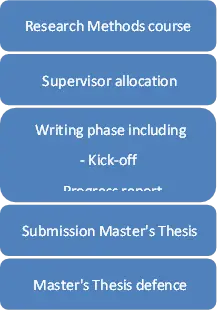
Figure 1: Overview of the Master's Thesis process and milestones
Step 1: Research Methods Course
In order to support students in developing their Master’s Thesis, the course Research Methods is part of the core courses of the MSM-MBA study programme. Students are required to attend this course before starting to write their Master’s Thesis.
The course will allow students to develop their initial ideas on their thesis project, culminating in a final project proposal. Students will also be familiarised with the main research techniques in thesis research (i.e. semi-structured interviews and textual analysis in qualitative research and survey design).
Please refer to the syllabus of the Research Methods course for the specific content, requirements and examinations of the course.
Step 2: Supervisor allocation
After the Research Methods course, for each student, an MSM supervisor is appointed. MSM aims to find a perfect match between a student and supervisor in terms of business, theoretical, methodological, and empirical interests and expertise.
Step 3: Writing phase
During the writing phase, there are three milestones: the kick-off meeting, the progress report meeting, and the final draft meeting. Before each meeting, the student should upload the required documents to Moodle/Canvas, and after the meeting, write a summary of the meeting, including the feedback the student received and an (adjusted) timeline and upload it to Moodle/Canvas.
Kick-off meeting
Right after the supervisor allocation, the kick-off meeting will take place, during which the supervisor will give feedback on the thesis topic/research proposal, and the proposed timeline will be discussed.
Progress report meeting
Halfway through the writing phase (approximately three months before the submission deadline), the progress report meeting will take place, where the student presents a short progress report (PowerPoint presentation) to the MSM supervisor. The student should present the current status of the thesis, elements of the thesis that still need to be completed, and areas where the student is facing problems. The progress report is not graded, but a presentation is mandatory. The presentation should last 15 minutes, followed by a Q&A session of 15 minutes with the MSM supervisor.
Final draft meeting
For the full-time variant of the MSM-MBA programme, the final draft meeting will take place approximately two weeks before the submission deadline. For the part-time variants, this meeting will take place approximately four weeks before the deadline.
Complaints during the writing phase
Should any difficulties emerge between the supervisor and the student during the writing phase, the supervisor and/or student will inform the MSM education office as soon as this occurs.
The MSM education officer will consider the matter and propose and implement a solution after consulting with the supervisor and/or student, and if applicable, the Academic Coordinator of the MSM-MBA study programme. This process has been set up in order to detect and resolve any difficulties during the writing process at an early stage.
Step 4: Submission of Master’s Thesis
Please carefully read Chapter 5, which describes the specific requirements of the Master’s Thesis.
The submission deadline for the final version of the Master’s Thesis is communicated by the MSM education office. The student is required to upload the Master’s Thesis to Moodle/Canvas before the submission deadline.
In case a student is not able to submit the Master’s Thesis before the deadline due to personal circumstances, the student can request an extension. Please refer to chapter 10.8 of the MSM-MBA and MSM-MM Education and Examination Regulations 2025-2026.
Students who miss the submission deadline are not allowed to defend and will receive a “No Grade” for the Master’s Thesis. Regarding resit opportunities, please refer to chapter 10.2 of the MSM-MBA and MSM-MM Education and Examination Regulations 2025-2026.
Upon submitting the Master’s Thesis, a student is required to confirm that the Master’s Thesis is original work by the student and is free of any kind of irregularities.
Step 5: Master’s Thesis defence
This is the last stage in the final project process and involves presenting, defending and assessing the Master’s Thesis. Defence sessions are organised at the end of each MSM-MBA study programme.
Dates for defence sessions for students who have been granted extension and/or who have not passed the first sit will be communicated by the MSM education office.
The evaluation panel consists of two evaluators (the MSM supervisor and an additional evaluator).
The defence is a public ceremony except for the assessment discussion by the evaluators.
The defence of the Master’s Thesis will take approximately 40 minutes in total and consists of:
1. Oral presentation of the Master’s Thesis by the student, 15 minutes
2. Q&A session where the evaluators will ask questions (the actual defence of the Master’s Thesis) 15-20 minutes
3. Assessment discussion in which the evaluators will determine the student’s final grade, 5 minutes
4. Debriefing of the student by the evaluators on a “pass” or “fail” outcome, 5 minutes
Assessment of the Master’s Thesis
The Master’s Thesis shall be assessed through the completion of the Master’s Thesis evaluation form by two evaluators, as included in Appendix I. Both evaluators need to complete each criterion of the Master’s Thesis evaluation form with a specific grade.
If the average grade of both evaluators for one or more competencies (programme objectives) is below 5.5, the Master’s Thesis is failed, and the student needs to take a resit.
If the average grade of both evaluators for all competencies (programme objectives) is at least a 5.5 and the difference of the final grades of both evaluators does not exceed 1.5, the total final grade of the Master’s thesis is the average of the final grades of both evaluators and rounded to a whole or half grade, except for grades between 5.25 and 5.49 that are rounded to 5.0.
In case the difference of the final grades of both evaluators exceeds 1.5, the Academic Coordinator of the MSM-MBA study programme will appoint a third evaluator. The third evaluator will assess the Master’s Thesis based on the Master’s Thesis evaluation form and will provide partial grades for each criterion except the criteria that are related to the defence. The total final grade of the Master’s thesis in this case is calculated by the average grades of all three evaluators, except the criteria that are related to the defence, for which the average of the first two evaluators is taken. The total final grade is rounded to a whole or half grade, except for grades between 5.25 and 5.49 that are rounded to 5.0.
Please refer to Appendix 1 of this MSM-MBA Master’s Thesis Guide for more details on grading and grade determination.
After the defence, the evaluators will submit the completed Master’s Thesis evaluation form to the MSM education office. The final grades will only be released by the MSM education office.
Specific procedural rules regarding the defence
Once the Master’s Thesis is submitted on time, a student is obliged to defend the Master’s Thesis at the scheduled defence session date of the applicable study programme or within three (3) months, counting from the day the Master’s Thesis was submitted. The same applies for re-submission of the Master’s Thesis.
A student obliged to defend, who does not show up at the defence without compelling reason and informing the MSM education office before the defence, or who is not willing to defend the Master’s Thesis, will receive a “No Grade” for the Master’s Thesis.
It is not allowed to re-submit a Master’s Thesis when the student has already obtained a passing final grade for the Master’s Thesis.
Resit of the Master’s Thesis
If the evaluation of the Master’s thesis or the defence thereof results in an insufficient grade or a “No Grade”, a student gets a resit opportunity. Please refer to chapter 10.2 of the MSM-MBA and MSM- MM Education and Examination Regulations 2025-2026.
Format
Irregularities
MSM has a zero-tolerance policy on irregularities such as fraud, plagiarism, forgery and academic outsourcing. All final submissions of the Master’s Thesis are checked for plagiarism. In case any irregularity is detected, it will be reported to the Board of Examiners, who may take appropriate measures/impose sanctions on the student. Please also refer to chapter 8 of the MSM-MBA and MSM-MM Education and Examination Regulations 2025-2026.
Confidentiality
If a student promises confidentiality to (survey) respondents – usually a good idea for most kinds of research questions – their identities or personal details should not be revealed in the Master’s Thesis (including drafts). However, students must keep this information in their file of research notes, and maintain this file in a safe place in case MSM officials may need to question a student about the specific procedures that led to a student’s research claims.
Non-disclosure agreement (NDA)
In the case of a confidential Master’s Thesis, a company or student may request that an agreement be signed between the student and MSM to ensure that no confidential information is disclosed to a third party. A standard NDA can be requested from the MSM education office. MSM will not sign any other agreements besides the standard NDA provided. In case an NDA is required, a student should organise this as early as possible in the process. This NDA needs to be included as an appendix to the Master’s Thesis.
The following tables show the Master’s Thesis evaluation forms, including the programme objectives, their corresponding learning goals (competencies), and the specific assessment criteria for each type of MSM- MBA Master’s Thesis.
The required competencies are clustered into programme objectives and are associated with one or more learning goals. Each learning goal is supported by one or more assessment criteria.
Each criterion receives a grade and is assessed according to the following schema:
|
Assessment |
Corresponding grade |
|
Outstanding |
10 |
|
Good |
8 |
|
Satisfactory |
6 |
|
Unsatisfactory |
4 |
|
Poor |
2 |
The grade of each program objective is calculated by the average of the assessment criteria of the respective objective.
The final grade of each evaluator is calculated by the average of all program objectives.
1. Master’s Thesis assessment criteria – Business Plan
|
Dublin Descriptors |
MSM-MBA programme objectives |
Business Plan |
|
|
Learning goals |
Assessment criteria |
||
|
DD1: Knowledge & Understanding |
Students are able to recognize and evaluate the nature, the impact of and the concepts of management in a globalizing, multicultural context. |
To recognise the business opportunities and market dynamics within a specific sector, indicating new customer needs, leading to specific new business opportunities |
The student clearly describes the new business concept and describes extensively the market in which it operates. |
|
The student provides a description of the target consumer, arguing why this product/service brings greater value than current products/services. |
|||
|
The student is able to recognize the relevant theoretical tools needed to carry out a market feasibility analysis. |
|||
|
To identify the different research methodologies necessary for carrying out the appropriate research |
The student identifies why the chosen investigation method is the most appropriate one for the business plan. |
||
|
The student clearly describes the informational sources collected and motivates why the selected data sources are relevant. |
|||
|
The student indicates the correct methodological literature (e.g., use of methods textbooks, reference is made to other articles). |
|||
|
DD2: Applying Knowledge |
Students are able to identify and apply the appropriate methods and tools to solve contemporary business challenges. |
To examine the market feasibility of the proposed business idea. |
The student correctly applies the tools of analysis necessary to estimate the market demand. |
|
The student calculates and determines the fixed and variable costs associated with the new business opportunity. |
|||
|
The student examines the competitive environment of the new business opportunity. |
|||
|
DD3: Making judgements |
Students are able to evaluate and determine responsible business decisions that impact on both organizational performance and society. |
To recommend a convincing, financially feasible and sustainable business plan. |
The student estimates and evaluates the projected market sales. |
|
The student estimates and evaluates projected resource needs and operations into cash-flow statements. |
|||
|
The student evaluates the current and future competitive environment that the new organization will face. |
|||
|
To Identify and analyse the ethical obligations and responsibilities of business |
The student analyses and evaluates the ethical obligations of their advice. |
||
|
DD4: Communication |
Students are able to discuss, debate as well as provide convincing ideas to a variety of multicultural stakeholder groups. |
To write effectively by discussing and providing convincing arguments. |
The student has demonstrated an academic style of writing, making use of correct grammar and vocabulary. |
|
The paper is correctly referenced, clearly indicating the work of others. |
|||
|
The paper is clearly structured, making it easy for the evaluator to read. |
|||
|
To present effectively by debating and providing convincing arguments. |
Careful listening and understanding of questions and arguments is shown and clear and convincing answers provided. |
||
|
The presentation presents a persuasive case for the paper (i.e. well-structured presentation, clear explanation). |
|||
|
The student has made good use of media (slides, video) in their presentation. |
|||
|
DD5: Learning skills |
Students are able to work autonomously and determine their own learning needs. |
To be able to determine relevant information (such as articles and data sources) that are relevant for the final project. |
The literature used is of sufficient quality (e.g., relevant literature in relation to problem statement, use of peer-reviewed journals, books from renowned publishers and reports from authoritative institutes, literature is up-to-date). |
|
The student has collected sufficient data (either quantitative or qualitative) necessary for the project. |
|||
2. Master’s Thesis assessment criteria – Business Consultancy Project
|
Dublin Descriptors |
MSM-MBA programme objectives |
Business Consultancy Project |
|
|
Learning goals |
Assessment criteria |
||
|
DD1: Knowledge & Understanding |
Students are able to recognize and evaluate the nature, the impact of and the concepts of management in a globalizing, multicultural context. |
To identify the current problems facing an organization as well as identify the necessary theoretical tools to analyse these issues. |
The student is able to identify and describe the core problems facing the organization. |
|
The student provides a detailed description of the business environment of the organization. |
|||
|
The student is able to identify the relevant theoretical tools needed to analyse the organizational issues at hand. |
|||
|
To identify the different research methodologies necessary for carrying out the appropriate research. |
The student identifies why the chosen investigation method is the most appropriate one for the consulting project. |
||
|
The student clearly describes the informational sources collected and motivates why the selected informational sources are relevant. |
|||
|
The student indicates the correct methodological literature (e.g., use of methods textbooks, reference is made to other articles). |
|||
|
DD2: Applying Knowledge |
Students are able to identify and apply the appropriate methods and tools to solve contemporary business challenges. |
To be able to apply the correct theoretical tools in order to study the organizational issues at hand. |
The student applies the theoretical tools correctly to the informational sources used (quantitative or qualitative). |
|
The student correctly applies the appropriate research methods to analyse the informational sources (quantitative or qualitative). |
|||
|
The student correctly interprets and examines the results of the analysis. |
|||
|
DD3: Making judgements |
Students are able to evaluate and determine responsible business decisions that impact on both organizational performance and society. |
To provide recommend organizational changes needed to resolve the organizational issues. |
The student recommends a clear strategic plan/advice to the organization. |
|
The student assesses the organizational, financial and other functional consequences of the proposed solution. |
|||
|
The student speculates on how the recommendations could be applied in a broader context. |
|||
|
To Identify ethical issues in the research and to ensure they are dealt with. |
The student analyses and evaluates the ethical obligations of their advice. |
||
|
DD4: Communication |
Students are able to discuss, debate as well as provide convincing ideas to a variety of multicultural stakeholder groups. |
To write effectively by discussing and providing convincing arguments. |
The student has demonstrated an academic style of writing, making use of correct grammar and vocabulary. |
|
The paper is correctly referenced, clearly indicating the work of others. |
|||
|
The paper is clearly structured, making it easy for the evaluator to read. |
|||
|
To present effectively by debating and providing convincing arguments. |
Careful listening and understanding of questions and arguments is shown and clear and convincing answers provided. |
||
|
The presentation presents a persuasive case for the paper (i.e. well-structured presentation, clear explanation). |
|||
|
The student has made good use of media (slides, video) in their presentation. |
|||
|
DD5: Learning skills |
Students are able to work autonomously and determine their own learning needs. |
To be able to find relevant information (such as articles and data sources) that are relevant for the final project. |
The literature used is of sufficient quality (e.g., relevant literature in relation to problem statement, use of peer-reviewed journals, books from renowned publishers and reports from authoritative institutes, literature is up-to-date). |
|
The student has collected sufficient data (either quantitative or qualitative) necessary for the project. |
|||
3. Master’s Thesis assessment criteria – Academic Research Paper
|
Dublin Descriptors |
MSM-MBA programme objectives |
Academic Research Paper MBA |
|
|
Learning goals |
Assessment criteria |
||
|
DD1: Knowledge & Understanding |
Students are able to recognize and evaluate the nature, the impact of and the concepts of management in a globalizing, multicultural context. |
To identify gaps in the current academic literature that provide a basis or opportunity for original research. |
The student clearly identifies and describes the research problem. |
|
The student identifies and discusses major and minor research questions. |
|||
|
The student identifies and discusses the relevant literature related to the problem statement. |
|||
|
To identify and discuss the different research methodologies necessary for carrying out the appropriate research. |
The student identifies why the chosen investigation method is the most appropriate one for the research problem. |
||
|
The student clearly describes the informational sources collected and motivates why the selected informational sources are relevant. |
|||
|
The student indicates the correct methodological literature (e.g., use of methods textbooks, reference is made to other articles). |
|||
|
DD2: Applying Knowledge |
Students are able to identify and apply the appropriate methods and tools to solve contemporary business challenges. |
To be able to apply the correct theoretical tools in order to study the academic issues at hand. |
The student applies the theoretical tools correctly to the informational sources used (quantitative or qualitative) |
|
The student correctly applies the appropriate research methods to analyse the informational sources (quantitative or qualitative). |
|||
|
The student correctly interprets and examines the results of the analysis. |
|||
|
DD3: Making judgements |
Students are able to evaluate and determine responsible business decisions that impact on both organizational performance and society. |
To be able to draw conclusions on the research carried out and formulate implications for future research |
The student designs an appropriate conceptual framework from the literature to investigate the research problem. |
|
The student accurately evaluates the results of their analysis, relating them to the conceptual framework. |
|||
|
The student examines the limitations of the research and provides recommendations for future research. |
|||
|
To Identify and analyse the ethical obligations and responsibilities of business |
The student analyses and evaluates the ethical obligations of their research. |
||
|
DD4: Communication |
Students are able to discuss, debate as well as provide convincing ideas to a variety of multicultural stakeholder groups. |
To write effectively by discussing and providing convincing arguments. |
The student has demonstrated an academic style of writing, making use of correct grammar and vocabulary |
|
The paper is correctly referenced, clearly indicating the work of others. |
|||
|
The paper is clearly structured, making it easy for the evaluator to read. |
|||
|
To present effectively by debating and providing convincing arguments. |
Careful listening and understanding of questions and arguments is shown and clear and convincing answers provided. |
||
|
The presentation presents a persuasive case for the paper (i.e. well-structured presentation, clear explanation). |
|||
|
The student has made good use of media (slides, video) in their presentation. |
|||
|
DD5: Learning skills |
Students are able to work autonomously and determine their own learning needs. |
To be able to find relevant information (such as articles and data sources) that are relevant for the final project. |
The literature used is of sufficient quality (e.g., relevant literature in relation to problem statement, use of peer-reviewed journals, books from renowned publishers and reports from authoritative institutes, literature is up-to-date) |
|
The student has collected sufficient data (either quantitative or qualitative) necessary for the project. |
|||
1. Master’s Thesis assessment criteria – Business Plan (new learning goals)
|
SBE Master Learning Goals |
MSM-MBA programme objectives |
Business Plan MBA |
|
|
Learning goals |
Assessment criteria |
||
|
Knowledge and Insight |
Students understand the challenges facing organisations in the (international) business environment |
Students identify the market feasibility of the proposed business idea |
Identify market gap |
|
Recognise relevant theoretical tools/literature |
|||
|
Business model logic/conceptual framework |
|||
|
Students apply the appropriate tools and methods for solving complex management problems |
Students apply the appropriate research tools necessary for investigating the feasibility of the business plan |
Data Collection |
|
|
Data Analysis |
|||
|
Academic Attitude |
Students critically evaluate, design solutions, and provide recommendations to complex business problems in the global economy |
Students develop a convincing, financially feasible and sustainable business plan |
Detailed business model |
|
Financial feasibility of the business plan |
|||
|
Students demonstrate self-motivation, proactive learning, and a focus on creating value and seizing opportunities |
Students evaluate relevant information (such as articles and data sources) that are relevant for the final project. |
Critical evaluation of sources |
|
|
Global Citizenship |
Students reflect on ethical and moral decisions/issues in the context of (multi)cultural environments |
Students Identify and analyse the ethical obligations related to their research |
Application of ethics in practice |
|
Interactive Skills |
Students communicate on ideas, concepts, methods and solutions with (non) specialist audience(s) using oral and written format |
Students communicate effectively with both written and verbal arguments |
Written communication |
|
Verbal communication |
|||
2. Master’s Thesis assessment criteria – Business Consultancy Project (new learning goals)
|
SBE Master Learning Goals |
MSM-MBA programme objectives |
Business Consultancy Project MBA |
|
|
Learning goals |
Assessment criteria |
||
|
Knowledge and Insight |
Students understand the challenges facing organisations in the (international) business environment |
Students identify the current problems facing an organization as well as identify the necessary theoretical tools to analyze these issues. |
Describe the core problem(s) facing the organization |
|
Recognise relevant theoretical tools/literature |
|||
|
Develop a conceptual framework |
|||
|
Students apply the appropriate tools and methods for solving complex management problems |
Students apply the research tools in order to study the organizational issues at hand. |
Data Collection |
|
|
Data Analysis |
|||
|
Academic Attitude |
Students critically evaluate, design solutions, and provide recommendations to complex business problems in the global economy |
Students recommend organizational changes needed to resolve the organizational issues |
Recommendation of a strategic plan/advice |
|
Interpretation of the results |
|||
|
Students demonstrate self-motivation, proactive learning, and a focus on creating value and seizing opportunities |
Students evaluate relevant information (such as articles and data sources) that are relevant for the final project. |
Critical evaluation of sources |
|
|
Global Citizenship |
Students reflect on ethical and moral decisions/issues in the context of (multi)cultural environments |
Students Identify and analyse the ethical obligations related to their research |
Application of ethics in practice |
|
Interactive Skills |
Students communicate on ideas, concepts, methods and solutions with (non) specialist audience(s) using oral and written format |
Students communicate effectively with both written and verbal arguments |
Written communication |
|
Verbal communication |
|||
3. Master’s Thesis assessment criteria – Academic Research Paper (new learning goals)
|
SBE Master Learning Goals |
MSM-MBA programme objectives |
Academic Research Paper MBA |
|
|
Learning goals |
Assessment criteria |
||
|
Knowledge and Insight |
Students understand the challenges facing organisations in the (international) business environment |
Students identify current research gaps in the academic literature |
Identify research gap |
|
Recognise relevant theoretical tools/literature |
|||
|
Develop a conceptual framework |
|||
|
Students apply the appropriate tools and methods for solving complex management problems |
Students apply the correct research tools in order to study the academic issues at hand |
Data Collection |
|
|
Data Analysis |
|||
|
Academic Attitude |
Students critically evaluate, design solutions, and provide recommendations to complex business problems in the global economy |
Students assess the research carried out and formulate implications for future research |
Discussion of results |
|
Implications for future research |
|||
|
Students demonstrate self-motivation, proactive learning, and a focus on creating value and seizing opportunities |
Students evaluate relevant information (such as articles and data sources) that are relevant for the final project. |
Critical evaluation of sources |
|
|
Global Citizenship |
Students reflect on ethical and moral decisions/issues in the context of (multi)cultural environments |
Students Identify and analyse the ethical obligations related to their research |
Identification of ethical concerns |
|
Interactive Skills |
Students communicate on ideas, concepts, methods and solutions with (non) specialist audience(s) using oral and written format |
Students communicate effectively with both written and verbal arguments |
Written communication |
|
Verbal communication |
|||
Achieve Higher Grades of Master's Thesis Guide MSM-MBA Assignment & Raise Your Grades
Order Non Plagiarized AssignmentStruggling with your Master's Thesis Guide MSM-MBA at Maastricht University? Get expert Thesis Help designed to support your academic success. Our specialists understand the practical and theoretical aspects of work-based learning and provide well-researched, structured guidance. With reliable Online Assignment Help, you can manage tight deadlines while maintaining high academic standards. We also offer high-quality Assignment Samples Solutions to help you understand the expected format and analysis techniques. Improve your learning outcomes, strengthen your concepts, and submit confidently with professional support tailored to the requirements of Maastricht University students. Achieve better grades with confidence.

Get Your Free Academic Quote
No hidden fees · Instant response · 100% confidential

Let's Book Your Work with Our Expert and Get High-Quality Content