Looking for Plagiarism-Free Answers for Your US, UK, Singapore, New Zealand, and Ireland College/University Assignments?
Talk to an Expert| Category | Assignment | Subject | Science |
|---|---|---|---|
| University | University College Dublin | Module Title | BMOL20090 Assignment 1 |
This assignment is “open book”. All five questions should be attempted. You must compose your answers without assistance from any other person. The completed assignment should be uploaded to Brightspace as a single PDF or Word file. Diagrams should be hand-drawn and clearly labelled, then photographed or scanned. The resulting image files should be embedded in the text of the relevant answer.
1. The molecule below (Figure 1) is used as an antiviral prodrug. What is/are the likely mode/s of action?
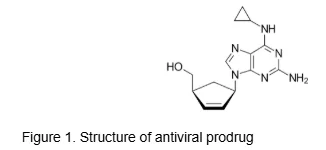
Figure 1. Structure of antiviral prodrug
2. Assume that the spacecraft “Tianwen-2” landed on Mars and has found a new life form that resembles bacteria and contains a molecule like DNA. The spacecraft can carry out simple experiments. To study replication, the Meselson-Stahl experiment is repeated. After 1 round of replication, there are DNA molecules with different densities; 50% is light DNA and 50% is heavy DNA. What mode of replication do you predict the Martian bacterium uses, and why did you reach that conclusion? If you are correct, what would the DNA look like after two rounds of replication?
3. The sequence below (Figure 2) shows the coding strand plus regulatory regions of a bacterial gene that encodes a single 38-residue protein. You can use tools like https://web.expasy.org/translate/ to help you identify the protein coding sequence.
a) Label the promoter sequence.
b) What are the first 10 amino acids generated?
c) Label and describe a possible transcriptional terminator.
4. The classic experiment by Hershey and Chase used a bacteriophage labelled with radioactive isotopes 32P and 35S. What was the aim of this experiment and what did it reveal? Why were 3H or 14C not used as radioactive labels?
5. Aminoacylation is the attachment of an amino acid to the 3′ end of a tRNA molecule. This occurs in two steps that are catalyzed by an aminoacyl-tRNA synthetase (not covered in lectures). In the first step, the amino acid reacts with ATP to form a 5′-aminoacyl adenylate (Figure 3). In the second step, the amino acid migrates from AMP onto the tRNA. Schematic diagrams of a typical tRNA and its acceptor stem are shown in Figure 4.
There are two ways in which amino acids are attached to the adenosine at the extreme 3′ end of the tRNA. Draw diagrams showing the linkages between amino acyl residue and the tRNA in both types of aminoacyl-tRNA. What is the difference between them?
Get Support With BMOL20090 Assignment 1 Before the Deadline
Assignment Help on WhatsAppNeed help with BMOL20090 Molecular Genetics and Biotech Assignment 1 at University College Dublin? Workingment offers reliable Assignment Help Ireland from expert university writers. Get well-structured, AI-free, 100% original, and plagiarism-free solutions covering all five questions, including antiviral prodrugs, DNA replication, bacterial gene regulation, the Hershey-Chase experiment, and aminoacyl-tRNA. Visit BMOL20090 Molecular Genetics and Biotech Assignment 1 Solution for expert support.

Get Your Free Academic Quote
No hidden fees · Instant response · 100% confidential

Let's Book Your Work with Our Expert and Get High-Quality Content