UK nursing assignments are assessed against the NMC Code 2018, the Future Nurse proficiency framework, and clinical evidence drawn from NICE guidelines. Workingment nursing assignment help satisfies those criteria, and markers can identify the difference.



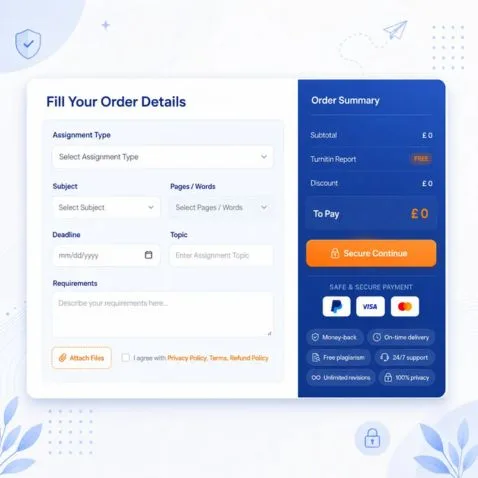
Get Your Free Academic Quote
No hidden fees · Instant response · 100% confidential
Our service is designed to remove stress while maintaining quality. From affordable nursing assignment writing to 24/7 support and plagiarism-free nursing assignment delivery, every feature is built to support your success.

We provide fully human-written assignments created by real nursing experts. This means your work includes genuine clinical reasoning, accurate application of NMC standards, and a natural academic tone.

Our writers are trained in UK nursing frameworks, including the NMC Code (2018), Compassion in Practice, and the 6Cs. They understand revalidation requirements and clinical roles, from Band 5 to Band 7 nurses.
Every assignment is written from scratch to ensure complete originality. We provide a free Turnitin report on request, so you can verify your work. Our plagiarism-free nursing assignment policy ensures no copied content.

We never miss deadlines, even in urgent situations. Our team can deliver assignments within 3–6 hours when required. This is perfect for students who have just finished long NHS shifts and still need to submit work on time.

We offer affordable nursing assignment writing without compromising quality. Our pricing is transparent and based on factors like word count, deadline, and academic level. If you are searching for cheap nursing assignment help UK.

Our support team is available 24/7, so you can get help anytime — even after late-night or early-morning shifts. Whether you need updates, revisions, or quick guidance, we are always here to support you.
We have a team of nursing assignment experts who have been serving since 2013 as a nursing assignment writer and knows NMC standards.

Nursing & Healthcare Specialist
I am an MSc in Nursing graduate of King’s College London and a registered nurse and academic writer. Having spent more than six years in clinical organizations prior to shifting to writing academic materials, I bring six years of clinical nursing experience to every assignment i write. I have worked with students at Coventry, Birmingham, and Greenwich on nursing reflections, care plans, and clinical reports.
Hire Writer
If yes, Workingment is renowned for NMC-aligned expert writers who assist you how to achieve higher grades.
Chat with expert! Critical Care Nursing
Pain Management Nursing
Cardiac Nursing
Critical Care Nursing
Pain Management Nursing
Cardiac Nursing
Nursing assignments are not marked on effort or clinical knowledge alone. The marking criteria assess how well a student can write analytically about clinical practice, apply recognised frameworks, cite credible evidence, and follow the structure each university specifies.
Most students who seek help with nursing assignments are clinically capable; the work suffers because the written structure does not reflect that. Effective nursing assignment assistance begins with identifying the precise points where marks are being lost.
This section breaks down the most common assignment types and where those marks consistently disappear.
Most reflective essays in UK nursing programmes are structured around one of three models: the Gibbs reflective cycle (1988), the Driscoll model (2007), or the Johns model of reflection (2000). Each moves through a structured sequence from describing a clinical event to critical analysis and action planning.
The most common reason for low marks in a nursing reflective essay is describing the clinical experience at length without moving into genuine critical analysis. A Gibbs essay that spends 70% of its word count on Description and Feelings, with less than 15% on Evaluation and Analysis, will not pass at degree level regardless of the event's clinical significance.
Markers look for clear identification of what happened clinically, evidence-based reasoning for decisions made, explicit links to the NMC Code, and a conclusion demonstrating changed practice or confirmed competency. The writing must be first person and analytical, not narrative.
A care plan that lists nursing interventions without linking them back to the patient assessment findings loses marks at every criterion. UK nursing care plans are structured around the APIE cycle (Assess, Plan, Implement, Evaluate), and markers check whether each stage follows logically from the previous one.
Evidence-based nursing assignment help with care planning addresses four areas: correct APIE structure, assessment tool selection and application, intervention justification from NICE guidelines, and NMC-compliant anonymisation.
Evidence-based practice reviews are assessed on two things above all: the quality of evidence used and the depth of critical appraisal applied. Evidence-based nursing assignment help in this area targets both.
Nursing case study assignments require students to connect pathophysiology to a patient scenario, then to clinical reasoning and evidence-based interventions. The mark-loss pattern is consistent: students explain the condition accurately but fail to link the pathophysiological process to the nursing assessment findings, and from there to the specific interventions chosen.
A case study on a patient with Type 2 diabetes and a foot ulcer, for example, should connect the pathophysiology of peripheral neuropathy and impaired circulation to the wound assessment tool selected, the NICE guideline governing that choice, and how the care plan reflects those decisions. Each step must be traceable to clinical evidence.
Students who need help with nursing assignments involving case studies need support with pathophysiology application, intervention-to-evidence linking, and framework selection: Roper-Logan-Tierney, Orem's Self-Care Deficit Theory, or the Roy Adaptation Model.
Drug calculation assignments sit within the pharmacology nursing curriculum and are marked differently from most written nursing tasks. The final answer accounts for only a portion of available marks. The full working method, unit conversions, formula application, and safe dosage confirmation must each be shown explicitly at every step.
Common errors include using mg when mL is required, omitting the unit conversion step, not stating the formula before applying it, and failing to confirm the calculated dose against the safe dose range for the patient's weight or age group. Paediatric calculations carry additional complexity through weight-based dosing.
Nursing assignment help for drug calculations focuses on formula selection for the correct drug route (IV, oral, or IM), unit conversion methodology, and presenting every calculation step in the required academic format.
OSCE nursing assessments at UK schools typically include a written reflection or theoretical justification alongside the practical component. Students frequently lose marks not on the clinical skill itself but on the written element, which they approach as a clinical handover note rather than an academic document.
The written element should demonstrate theoretical understanding of the skill being assessed, explicit links to the NMC Future Nurse proficiency standards most relevant to that skill, and critical reflection on the student's own performance. It is an academic document with clinical content.
Online nursing assignment help with OSCE written components focuses on academic register, theoretical underpinning, and structured reflection. Workingment's nursing assignment writing service covers the full reflective and academic framework, not just grammar and formatting.
The nursing assignment support a student needs at Year 1 is fundamentally different from what a final-year or post-registration student requires. Assessment types, marking criteria, and academic expectations shift considerably across year groups, and support that ignores those differences rarely delivers the right result.
Whether you need online nursing assignment help for an undergraduate care plan or guidance on a postgraduate module, Workingment structures its approach around your specific year of study and the standards your markers apply.
Year 1 nursing assignments typically cover anatomy and physiology essays, the NMC Code, professional values, ethics reflections, and first use of structured reflective models such as Gibbs or Driscoll. The academic level is foundational, but the shift from informal writing to academic writing is where most first-year students struggle.
If you need help with your nursing assignment at Year 1, the issues are almost always structural, not clinical: informal tone, missing in-text citations, thin reference lists, and reflective writing that describes events rather than analyses them. Workingment's Year 1 support focuses on academic structure, correct referencing, and building the right habits early.
Years 2 and 3 introduce formats not seen at Year 1: multi-system case studies, evidence-based practice reviews with formal search strategies, pharmacology and medication management assignments, and leadership modules. The academic standard rises sharply. Markers expect active critical engagement with evidence, not a summary of it.
Literature reviews require a defensible PICO framework and a documented database search trail. Year 3 leadership assignments reference transformational leadership theory, frameworks including the Five Year Forward View, and the NMC Standards for Leadership.
If you need help writing your nursing assignment at Level 5 or 6, the marking criteria you face are fundamentally different from Year 1. Workingment's support focuses on critical depth, evidence hierarchy, and clinical framework application.
Final-year and post-registration nursing students face the most demanding academic work in the degree cycle: dissertations, systematic literature reviews, portfolio compilation, and CPD-linked reflective assignments for NMC revalidation. Post-registration nurses returning to study after years of clinical practice typically struggle most with the shift back into formal academic writing.
Masters-level programmes including MSN, NMP, and ACP courses require advanced critical appraisal, complex policy analysis, prescribing competency evidence, and in some cases clinical audit methodology.
Workingment's support at this level includes dissertation chapter guidance, advanced literature review methodology, and revalidation portfolio structuring, addressing the specific demands of post-registration academic work that standard undergraduate support does not cover.
Every nursing assignment Workingment supports is written against the NMC Code 2018 and the seven platforms of the Future Nurse proficiency standards.
These platforms form the marking framework UK nursing assessors apply at Level 4, 5, and 6, and assignments that fail to engage with them at the appropriate depth consistently underperform, regardless of writing quality.
The seven platforms, with the assignment types most commonly mapped to each:
Evidence-based nursing assignment support at Workingment draws on NICE clinical guidelines, the Cochrane Library, the British Journal of Nursing, and peer-reviewed journals indexed on CINAHL and PubMed. Blogs and non-peer-reviewed sources are not used.
Most UK nursing programmes use Harvard referencing; some use APA 7th. The referencing style is confirmed per the student's brief, and reference lists are cross-checked against in-text citations before the work is returned.
All case study and care plan work anonymises patient, service user, and placement details in line with NMC Code clause 5, protecting students from any fitness-to-practise concern.
Nursing in the UK is registered across four distinct NMC fields: adult nursing, mental health nursing, children's (paediatric) nursing, and learning disability nursing. Each field carries its own clinical frameworks, legislative references, and assessment standards, meaning an assignment that works for one field rarely translates to another. As a nursing assignment helper, Workingment provides field-specific academic support that matches the exact expectations of your course and your markers.
Adult nursing assignments span acute and long-term condition management, clinical decision-making across hospital and community settings, and complex care planning. Common formats include care plans for conditions such as COPD, heart failure, post-surgical recovery, and dementia.
Markers expect alignment with NICE guidelines, correct application of assessment tools including NEWS2, MUST, and the Barthel Index, and clear justification for chosen interventions using current evidence.
Academic demand increases significantly between years: Year 1 focuses on foundational anatomy and physiology, while Years 2 and 3 require multi-system case analysis and critical clinical reasoning.
Mental health nursing assignments sit at the intersection of clinical knowledge and legal responsibility. Markers expect direct reference to the Mental Health Act 1983 (amended 2007), the Mental Capacity Act 2005, and NICE guidelines covering conditions including depression, schizophrenia, and bipolar disorder.
Reflective assignments carry a dual requirement: therapeutic empathy and structured critical analysis, both evidenced from practice. Risk assessment frameworks, recovery models such as the CHIME framework, and person-centred care principles should run throughout the submission. Generic mental health content without legislative grounding rarely meets the academic standard at Level 5 or above.
Paediatric nursing assignments require engagement with family-centred care models, child development theory from Piaget and Erikson, and safeguarding requirements under the Children Act 1989.
Drug calculations in paediatric submissions are weight-based, carry greater complexity than adult equivalents, and are weighted accordingly in marking schemes. Clinical scenario work must incorporate growth and developmental assessment tools, PEWS scores, and adherence to NICE paediatric guidelines.
A distinguishing feature of paediatric nursing academic work is the communication criterion: markers assess how students demonstrate engagement with families, not only patients, as a clinical skill in its own right.
Learning disability nursing academic submissions are grounded in person-centred planning, the Social Model of Disability, and two key pieces of legislation: the Mental Capacity Act 2005 and the Equality Act 2010.
Assignments frequently address reasonable adjustments in healthcare settings, supported decision-making, and adult safeguarding frameworks. Markers expect reference to the Valuing People Now policy (2009) and the NHS England Learning Disability Improvement Standards (2018).
Workingment supports undergraduate and postgraduate LD nursing students with placement reflections, specialist module submissions, and STOMP/STAMP clinical assignments, ensuring the academic work reflects current policy and practice.
If you're searching for academic help , here are some top-quality academic services available to you:
What Do Our Writing Experts Offer?
Get access to our premium assignment solutions to get academic success whether it's a report, dissertation, report, ppt, case study, and essay. Our Writers are always ready to help you.
Book qualified writers to guarantee an A+ in academic papers.

I needed to write the ‘Nursing Leadership and Management’ and this was not an easy task for me. The expert team of Workingment helped me and provided real-world practical examples that supported me so much to make my assignment impressive. Thanks, team.
It was very challenging for me to write the mental health assignment. With the help of workingment, I got proper references for research and case studies. The final document of the assignment was very informative and professionally written. I am very impressed with their services.
My assignment for ‘Evidence-Based Practice in Nursing’ was very long and difficult. But the expert team workingment helped me by providing proper research and real-world case study examples, making the project very accurate and error-free. It was a great experience.
The topic ‘Psychological impact of living with sickle cell Anemia’ is one of the complex topics I got to write a assignment on. I decided to take the help of the experts at Workingment for my nursing assignment. I have a great experience with this team.
I needed data analysis and case studies for a pediatric nursing assignment writing. Workingment guided me at every step and my assignment was well organised. Also, they delivered it on time. My professor appreciated me, and highly recommended to UK students.
It was impossible to complete the ‘Pharmacology in Nursing’ assignment work without the help of the Workingment team. Their expert made me understand all the topics and key aspects of medicine and its treatment very easily and my concepts and doubts got cleared. I got very positive feedback
I was struggling with the Adult Nursing case study assignment. Workingment helped me to write my project by providing structure, references, and case studies. The final draft they delivered was very detailed and engaging.
I got the help of an expert team of workingment to complete the ‘Patient Safety and Risk Management’ assignment. They provided me with solutions at every step and this made my report document very organized, engaging, and impactful, thank you so much.
I was quite confused about the topic of the ‘Geriatric Nursing’ assignment writing. The team of workingment provided clear guidance and delivered the well-researched document to me. The content of the final draft was informative and plagiarism-free.
I was having trouble understanding the concepts in the 'Community Health Nursing' assignment. WorkingMention helped me get the right explanations and relevant examples. It was a great experience for me, highly recommend it!
‘Anatomy and Physiology for Nurses’ was looking technical topic to write an assignment. But workingment team provided detailed notes and explanations to me. The assignment was written in high standard method. They delivered the final document within the deadline I felt too relieved after submission.
The ‘Nutrition and Dietetics in Nursing’ assignment was very challenging for me. The working team provided me with the proper format and research material to meet the university guidelines. I made the final submission on time and got good marks. Highly Recommended.
I need so many references to complete my surgical nursing assignment. Workingment provided me latest research and case studies that made my assignment very impactful and engaged. Thanks, team! Highly recommend this professional service.

Workingment provides academic support for all core UK nursing assignment types: reflective essays using Gibbs, Driscoll, or Johns models; care plans following the APIE framework; evidence-based practice reviews; clinical case studies; drug calculation assignments; OSCE written components; literature reviews; and final-year dissertations. Support covers all four NMC fields: adult, mental health, children's, and learning disability nursing.
All work is produced in line with the NMC Code 2018 and the seven platforms of the Future Nurse proficiency standards. Writers draw on NICE guidelines, Cochrane Library reviews, and peer-reviewed nursing journals as evidence sources. Patient and placement details included in case studies and care plans are anonymised in accordance with NMC Code clause 5, making every submission appropriate as evidence-based nursing assignment work.
Most UK nursing programmes use Harvard referencing; some specify APA. Workingment's nursing writing services follow whichever style your module or department requires. Include the confirmed referencing style when submitting your brief. If your institution uses a specific Harvard variant such as Leeds or Cite Them Right, note that in the brief and the reference list will be formatted accordingly.
Yes. When you need to do your nursing assignment to a tight deadline, state the exact submission date and flag the urgency when submitting your brief. Turnaround time depends on assignment type and word count. Shorter reflective assignments can typically be completed faster than full care plans or evidence-based practice reviews.
Every assignment produced through Workingment's nursing assignment help online service is written from scratch against your specific brief. All work passes through plagiarism detection software before delivery.
Workingment does not share student details, assignment content, or order information with any third party. Completed assignments are not reused or resold. The order process is secured.
Yes. Workingment provides nursing assignment assistance for post-registration students, including those on MSN, NMP, and ACP programmes. Whether you need help writing your nursing assignment at Masters level or require support with dissertation chapters, advanced literature review methodology, or revalidation portfolio structuring, support is available across the full scope of post-registration academic work.
Let's Book Your Work with Our Expert and Get High-Quality Content