| Category |
LEVEL 3 DIPLOMA IN ADULT CARE ANSWERS |
Subject |
Nursing
|
| University |
________
|
Module Title |
Unit 2 M1 Promote Communications in Care Settings |
Level 3 Diploma in Adult Care Answers
Unit 2 M1 Overview
Promote Communication in Care Settings for the Level 3 Diploma in Adult Care explores methods of communication and ways to establish individuals' communication needs.
It goes on to look at communication barriers and how they may be overcome before discussing the importance of confidentiality in care settings.
It comprises 4 learning outcomes, each with between 3 and 8 assessment criteria.
Special Note:
DO NOT make the mistake of copying the exact information from this sample. This sample is posted online, and copy pasting information from here directly into your assignment will make you get caught in plagiarism, which will eventually make you fail your course and can even make you repeat your whole course. We know you take shortcuts when you have no options left for completing your assignment, but do not take this one. You can simply seek help from our experts, and that too at affordable prices.
LO1 Understand why effective communication is important in the work setting.
[Solved] 1.1 Identifies the different reasons people communicate.
Answer:
In a care setting, people communicate due to several reasons, which are very significant as they benefit an individual and the quality of care received. One of them is to articulate needs and desires, e.g., when a service user informs a care worker that he/she is in pain or require help with daily tasks. This assists in making the care person-centred and responsive.
Another reason is to communicate information, such as when staff share information amongst themselves about the condition, medication or care plan of a patient. This guarantees continuity and safety in the provision of care. Relationships and trust are also established through communication and are necessary in care settings since people might be vulnerable and require emotional support.
Communication also involves the giving and receiving of instructions to carry out care procedures or to provide instructions to colleagues. Moreover, it is possible to communicate with other people to share feelings and emotions and make the care workers learn about their mental and emotional health.
Lastly, social interaction can be achieved through communication, which alleviates feelings of loneliness and ensures inclusion, particularly among people in residential or long-term care facilities.
[Solved] 1.2 Explain how communication affects relationships in the work setting.
Answer:
Communication directly influences the relationships within a care environment since it aids in establishing trust, understanding and respect among people, care workers and other colleagues. When communication is effective, respectful and helpful, it forms positive relationships. As an illustration, when a care worker actively listens to a service user and kindly responds to him or her, the individual feels that he or she is appreciated and understood, which helps in building trust.
Communication is also effective in preventing misunderstandings and conflicts. When staff communicate effectively on care plans or duties, it ensures that everybody understands each other, hence teamwork and cooperation improve. This enhances the quality of care that is delivered to the people.
Conversely, bad communication may destroy relationships. An example is when people use the wrong language or fail to listen correctly, and even neglecting the needs of a person can leave them frustrated, disrespected and neglected. This may create a failure in trust and decrease the efficacy of care.
Thus, effective communication is key to good and professional working relationships and a conducive care environment in the workplace.
[Solved] 1.3 Explain how communication skills can be used to manage complex, sensitive, abusive and difficult situations.
Answer:
When dealing with complex, sensitive, abusive, and difficult situations in a care setting, communication skills are critical. Active listening enables care workers to listen to the individual without interruption to get a clear picture of what the individual is concerned about, thus making him feel that he or she is being heard and respected. In one instance, when a service user is angry or frustrated, he/she can be listened to determine how to define his/her emotion.
Appropriate tone, empathy and non-judgmental language can be used in sensitive situations like discussing personal care or health problems to preserve dignity and trust. This helps them to open up without apprehension of embarrassment or discrimination.
Communication skills, including calmness, clear speaking and de-escalation skills, are valuable when handling hard or aggressive behaviour. As an example, a soothing voice and supportive language can be used to take the tension down a notch and make sure that the situation does not get out of control.
Effective communication in situations involving abuse involves reporting the issues transparently and truthfully, and also assuring the victim that he or she is safe and that he or she has someone to rely on. It is also important to keep confidentiality and observe the right procedures.
[Solved] 1.4 Explain the importance of maintaining open and honest communication.
Answer:
Open and honest communication is crucial in care settings as it can be used to build trust, maintain safety, and enhance high-quality care. Through open communication between care workers, the individuals are comfortable sharing their needs, concerns and preferences. This helps in person-centred care, in that correct and full information can be used to make decisions.
It is also important to have honest communication that can help to sustain professional relations between staff members. The information being given by team members in a clear and truthful manner will decrease the chances of mistakes, including misinterpretations of medication, care plans, or responsibilities. This assists in maintaining continuity and consistency in the provision of care.
Open communication promotes a culture in which issues or errors may be talked about without the fear of being judged, and problems may be resolved promptly and efficiently. To illustrate, when a care worker observes a change in the state of a service user, he or she can be honest when reporting on it to avoid additional health problems.
Conversely, the absence of sincerity or effective communication may result in misunderstandings, distrust, and even damage to people. Openness and honesty thus play a vital role in ensuring the safety, respect, and effective care environments.
Lo2 Understand the variety in people’s communication needs and preferences.
[Solved] 2.1 Describe the range of communication styles, methods and skills available.
Answer:
A care setting has various communication styles, techniques and abilities that can be applied to address the needs of individuals. There are verbal, non-verbal, formal and informal communication styles. Verbal communication deals with speaking in a clear and proper manner, whereas non-verbal communication deals with body language, facial expression, eye contact and gestures. Professional situations are characterised by formal communication (e.g. reports and meetings), whereas more relaxed communication is employed when communicating with service users in everyday situations.
Numerous methods of communication are also available. These are face-to-face communication, written records, telephone calls and digital communication. Moreover, other techniques such as sign language, braille, pictures, symbols and communication aids are also employed to assist people with special needs, e.g. hearing impairments and speech impairments.
Communication skills are also vital, and they involve active listening, empathy, patience, clarity and respect. As an illustration, active listening can be used by a care worker to get to know the concerns of a service user, or simple language can be used in order to make sure that the service user fully understands.
[Solved] 2.2 Explain how people may use and/or interpret communication methods and styles in different ways.
Answer:
- Cultural Differences: Communication can be applied and interpreted differently by people of various cultural backgrounds. To illustrate, in one culture eye contact can be regarded as a sign of respect, whereas in another culture eye contact can be regarded as disrespectful or rude. The meaning of gestures and personal space can also be different.
- Language and Understanding: Communication may be influenced by language barriers in terms of its application and interpretation. An individual who is not a good English speaker might misinterpret instructions or information, be confused or make an error during care.
- Sensory Impairments: People who are either hearing or sight impaired might have different ways of communicating. An example is that the hearing-impaired person might use sign language/lip reading, whereas the person with a visual impairment might use verbal communication more.
- Emotions and Experiences: The feelings that a person experiences, such as stress or anxiety, can influence his or her interpretation of communication. Previous experiences can also play a role in the response of a person, such as one misinterpreting the tone or intent.
- Tone and Body Language: People may interpret tone of voice, facial expressions and body language differently. What is normal to one individual might be considered as negative or unfriendly by another.
[Solved] 2.3 Describe the factors to consider when promoting effective communication.
Answer:
- Individual Needs: One should also take into consideration the unique needs of every person, including age, capacity, language, and disability. As an illustration, an individual with hearing impairment might require visual aids or sign language, and another one with learning problems might need simple and straightforward language.
- Environment: Communication can be influenced by the surroundings. A comfortable setting that is quiet and well-lit enables people to concentrate and comprehend more. Barriers can be caused by noise, poor lighting or lack of privacy.
- Cultural Background: The cultural beliefs and values must be observed, as they may affect the way of communication delivery and reception. Understanding cultural differences will allow preventing misunderstandings and enhance respect.
- Emotional State: Emotions of a person, like stress, anxiety or anger, can influence the way he/she communicates and perceive information. Such situations need the patient and an encouraging attitude from care workers.
- Methods and Aids of Communication: Appropriate methods, including verbal, non-verbal or communication aids (e.g. pictures, symbols), will make the message perfectly understood.
- Clarity and Respect: Messages are to be straightforward, direct and respectful. Active listening and use of the appropriate tone are useful in establishing trust and effective communication.
[Solved] 2.4 Describe how digital and other technologies can be used to promote and enhance communication between oneself and others.
Answer:
- Digital Communication Tools: Information can be shared among care workers and other professionals quickly and efficiently using digital technologies like emails, mobile phones, and messaging apps. In particular, employees are able to share information about the status of a service user or care plan changes in real-time with colleagues.
- Video and Virtual Communication: Video calls and Internet-based services provide the opportunity to communicate with physically absent individuals, families, and professionals. It can be particularly helpful to keep in touch with family members or to attend virtual meetings and consultations.
- Electronic Records and Systems: Digital systems are commonly used in care settings to capture and archive information about people. These systems assist in making sure that all the staff members have the accurate and up-to-date information to enhance communication and continuity of care.
- Assistive Technologies: People with communication challenges can be assisted with technology like hearing aids, speech-to-text applications and communication devices. An example will be a tablet with symbols or voice output to enable an individual to communicate their needs.
- Enhancing Access and Inclusion: Technology can be used to enhance access to communication by providing the functionality of translation, large texts, or audio support, assisting people with various requirements to make communication effective.
[Solved] 2.5 Identify the barriers that may be present when communicating with others.
Answer:
- Physical Barriers: These are environmental factors like noise, inappropriate lighting, absence of privacy or physical distance. As an example, a noisy care environment may cause people to have difficulties hearing or focusing adequately.
- Language Barriers: Linguistic or insufficient English can cause misunderstanding. Complex words or jargon may also be confusing.
- Sensory Impairments: The deafness or muteness, blindness or visual loss, or speech disability may be a problem in communication without proper assistance.
- Emotional Barriers: Emotions like stress, anxiety, anger or fear may influence the way an individual communicates or comprehends information.
- Cultural Differences: Misinterpretation of messages can be brought out by different beliefs, values and communication styles, like the body language or tone.
- Attitudinal Barriers: Effective communication can be hindered by negative attitudes, lack of respect or assumptions. An example is that listening inappropriately or passing judgment on someone may cause a barrier.
- Insufficient Skills or Knowledge: Failure to communicate with the person properly might fail to communicate with him or her in a situation where the care worker lacks communication skills or the person does not need the care services.
The recognition of these barriers assists care workers in taking the right action in order to address them and enhance communication.
[Solved] AC 2.6: Explain how to access extra support or services to enable effective communication with and between individuals.
Answer:
Additional support or services can be required in care settings to guarantee effective communication, particularly in cases where people have particular requirements. Accessing support may be through determining the communication needs of the individual via care plans, assessments or talking to the individual and the family. This assists in identifying the kind of support needed.
Care workers are then able to consult relevant professionals, e.g. language barrier interpreters, people with hearing difficulties, sign language specialists or speech and language therapists in case of communication problems. Such services are normally availed by the organisation, the local authorities or health providers.
The resources available in the workplace should also be used (e.g. communication aids, e.g. picture boards, tablets, hearing devices), and senior staff or managers should provide guidance. The organisation has policies and procedures that will inform how to seek extra support.
Care workers might be required to collaborate with outside agencies or support services in certain cases to address the needs of the individual. Care workers can make communication clear, inclusive, and person-centred by having access to the appropriate support and services.
[Solved] 2.7 Describe the impact of poor or inappropriate communication practices.
Answer:
The outcome of poor or inappropriate communication within a care setting can be very detrimental to individuals and the quality of care. The first significant effect is the misinterpretation of information, where the key details of the needs of the person, medication, or condition are conveyed in the wrong manner. This may result in errors and jeopardise the health and safety of the individual.
It can also destroy trust and relationships. When a care worker does not listen well or speaks impolitely to a person or does not respect that individual, the individual may feel neglected, disrespected, or undermined. This may result in them becoming reluctant to communicate in future.
Ineffective communication may also influence the emotional state of an individual, making him or her feel frustrated, anxious, or isolated. To illustrate, the inability to articulate needs can be a source of distress.
Moreover, it may cause ineffective collaboration between the staff, which may result in misunderstandings, disagreements, and absence of coordination in care delivery.
LO3. Be able to communicate effectively with others.
[Solved] 3.1 Demonstrate a range of effective communication styles, methods and skills Essay.
Answer:
A variety of communication styles, techniques, and competencies are employed in a care setting to guarantee effective communication. Verbal communication is all about talking with clarity, using simple language, and modifying the tone of the voice according to the circumstances. Non-verbal communication consists of eye contact, facial expressions, gestures, and body language, which may be used to support messages and demonstrate an understanding. Written delivery, like the care records and reports, should be readable, precise, and professional.
Various approaches, including face-to-face interaction, telephone conversations and utilisation of communication aids including pictures or symbols, can also be applied based on the needs of the individual. Active listening, empathy, patience, and respect are important communication skills. As an example, a care worker can pay attention to the concerns of a service user, react without panic, and demonstrate support with the help of proper body language.
A mixture of these styles, techniques, and abilities can assist in making communication effective, inclusive, and value-added to high-quality care.
[Solved] 3.2 Apply communication styles, skills and methods in relation to the message and audience to enhance the quality of the interaction.
Answer:
Communication necessitates style, skills and techniques which must be tailored to the message and the audience. As an illustration, a care worker can talk to a service user with a learning challenge using simple language, brief sentences and graphics to make sure they understand. Conversely, speaking to healthcare working people, more formal language and correct expressions can be needed.
The body language and tone of voice must also be fit. A gentle, respectful, and sympathetic attitude is needed when dealing with sensitive issues, i.e. personal care or health concerns. Listening is necessary in order to make sure that the message is properly understood and to make the person state his or her opinions.
Clarity is also enhanced by the selection of the appropriate method of communication, such as face-to-face to discuss vital cases or written records to document important cases. This means that communication can be tailored towards a more effective, meaningful, person-centred interaction.
[Solved] 3.3 Demonstrate how to use communication skills to build positive relationships.
Answer:
In care environments, communication skills are important in establishing positive relationships. The listener must be active and demonstrate true interest in what the person is talking about, making him/her feel important and respected. Eye contact, open body language, and responding accordingly also contribute to giving a feeling of trust.
Another skill that will help in this case is empathy, which enables the care workers to feel and react to the emotions of others. As an example, demonstrating love and patience towards a service user in case of anger can make the latter feel accepted and natural.
Open communication is promoted by the use of clear and respectful language and a positive tone. Trust is also established with time, consistency and honesty. An example is that fulfilling promises and giving correct information builds relationships.
With the help of these skills of communication, care workers will be able to establish a strong, trusting and professional relationship with people, and with their peers.
[Solved] 3.4 Adapt communication styles, skills and methods to overcome barriers to communication with a range of people.
Answer:
Communication in a care setting should be modified to address various barriers and address the needs of individuals. Using a hearing-impaired person as an example, a care worker can use clear movements of lips, gestures or even written messages so as to get the message across. In the case of those with learning disabilities, communication can be enhanced through the use of simple language, short sentences and visuals like pictures or symbols to facilitate effective communication.
Language barriers may be resolved with the help of interpreters, translation applications, or simple words that they can use in their favourite language. The soothing tone, patience, and reassurance that can be used with individuals who are anxious or upset can discourage the development of emotional barriers and foster open communication.
Communication can also be enhanced through environmental changes, such as lessening noise or relocating to a noiseless environment. Eye contact, facial expression, and body language should be used as a means of support appropriately to enhance understanding.
Changing care communication style, methods, and skills could help care workers make sure that messages are clear, inclusive, and person-centred, and enhance the overall quality of care.
LO4. Be able to meet the communication and language needs, wishes and preferences of individuals.
[Solved] 4.1 Establish the communication and language needs, wishes and preferences of individuals to maximise the quality of interaction.
Answer:
Care workers are advised to start by reviewing care plans, assessments, and recorded preferences to determine individual needs in communication and language. Such documents usually contain valuable details regarding the manner in which the person wishes to communicate, i.e. his or her favourite language, level of knowledge or any sensory loss.
It is also necessary to enquire, where possible, directly of the person, regarding his/her wishes and preferences. This fosters person-centred care and makes their voice heard. It can also be helpful to see the way in which the person communicates, including their body language, facial expression or reaction.
Trying to include family members, carers or other professionals (e.g. speech and language therapists) can assist in understanding the needs of the individual better. Indicatively, they can recommend the use of communication aids such as pictures or machines.
Recognising and cognising these needs, care workers can adjust their communication style, making interactions effective, clear, respectful, and meaningful, advancing overall care quality.
[Solved] 4.2 Demonstrate a range of communication styles, methods and skills to meet individuals’ needs.
Answer:
Various communication styles, methods, and skills care workers should employ to address the various needs of people. Verbal communication ought to be straightforward, unrestrained and to the understanding of the individual. Messages can be supported and reinforced with the help of non-verbal communication, like eye contact, gestures, and facial expressions.
Various approaches might involve face-to-face, written, or communication aids, like pictures, symbols, or electronic devices. As an example, a picture board can be used by a care worker to assist an individual with speech problems in reporting their needs.
Such skills as active listening, patience, empathy and respect are important. An example is providing sufficient time to the person to reply and demonstrating empathy, which can foster confidence.
Through various communication strategies, care workers can make sure that everyone can express themselves and interpret information so that interactions can be more effective and person-centred.
[Solved] 4.3 Demonstrate how to respond to an individual’s reactions during interactions.
Answer:
It is significant to react in the right manner to the reactions of an individual in order to communicate effectively. Care workers need to be attentive to both verbal and non-verbal communication, including the tone of voice, the expression, and the body language. Indicatively, when one seems to be disoriented, the care worker ought to paraphrase or repeat the message with the use of simpler terms.
When an individual gets angry or nervous, one should also remember to calm down, express sympathy, and give assurance. This assists the person in feeling helped and understood. Their feelings should be acknowledged by active listening and letting them express themselves.
Care workers need to be adaptable too and change their method of communication depending on the reaction of the individual. An illustration of this is in case a certain method is not working; they can employ visual aids or seek extra assistance. Care workers can sustain good relations, alleviate distress, and have effective communication by responding appropriately.
[Solved] 4.4 Demonstrate professionalism when using a variety of communication methods.
Answer:
In care settings, professional communication is required to uphold trust, respect, and confidentiality. Whenever dealing with individuals, families and colleagues, care workers are expected to be appropriate in language, tone and behaviour. This involves one being polite, respectful and non-judgmental forms of communication, including written documents, emails, and computer-based systems. Information should be precise, understandable, and confidential, in accordance with the guidelines at all times.
In all forms of communication, including written documents, emails, and computer-based systems, information should be precise, understandable, and confidential, in accordance with the organisation's policies. Indicatively, the care records are supposed to be filled properly and only disseminated to the authorised persons.
Boundaries also include the aspect of professionalism and not giving personal views and sharing inappropriate information. Respect and understanding are also exhibited through active listening and responding in the right manner.
Moreover, workplace policies and procedures must be adhered to by the care workers in their communication to ensure consistency and security. Through professionalism, communication will be effective, trustworthy and will support quality care.
LO5. Understand the role of independent advocacy services in supporting individuals to communicate their wishes, needs and preferences.
[Solved] 5.1 Explain the purpose and principles of independent advocacy.
Answer:
Independent advocacy refers to taking action to help people have their voices heard and to have their rights, decisions, and wishes acknowledged. The primary aim is to assist individuals to voice their opinions, particularly when they might experience some challenges speaking out on their own behalf owing to illness, disability and lack of confidence. The advocates represent the best interests of the individual rather than the organisation and family.
The tenets of independent advocacy are independence, empowerment, confidentiality, and equality. Independence implies that the advocate is not subject to anyone and serves the individuals. Empowerment is concerned with having individuals make their own decisions and control their lives. Confidentiality means that the personal information will be held in secret except where there is a danger of harm. Equality implies that all people should be able to be listened to, irrespective of their background or capacity.
AC 5.2 Identify when to offer support to individuals to access an advocate.
Answer:
Help to find an advocate should be provided in case a person cannot express his or her ideas or make effective decisions. Such as, it can encompass individuals with learning disabilities, mental health issues or communication challenges.
One should also provide advocacy for people who are making significant choices, including planning of care, medical services, or transition between living situations. In such cases, an advocate can see their desires are well-represented.
The consideration of advocacy should also be applied in case there are any safeguarding concerns, like abuse or neglect, where one can be insecure or incapable of speaking up. Moreover, in case of a conflict of interest between the individuals and the family members or the professional, an advocate might assist in this situation.
By understanding such scenarios, care workers will be able to provide people with the necessary support to be heard and defend their rights.
[Solved] 5.3 Describe how to support individuals to access advocacy services.
Answer:
In order to assist people to utilise advocacy services, care workers should explain in a very straightforward and clear manner what advocacy is to the individual, so that they can know how advocacy can assist them. This includes explaining that an advocate will support their views and act in their best interests.
Care workers may then inform them about existing advocacy services, e.g., local organisations or support groups. They can assist the individual to get in touch with these services either through phone calls, arranging meetings or filling referral forms, but only with the consent of the individual.
The person should also be encouraged and helped to make the decision, and made to feel at ease and engaged in the process. The sharing of information must also be done respectfully through confidentiality and organisational policies by care workers.
In other instances, care workers might be called upon to liaise with other professionals to organise advocacy services. Care workers can make sure that people can get advocacy services and be heard by providing guidance and practical assistance.
LO6. Understand principles and practice of confidentiality in care settings.
[Solved] 6.1 Explain the meaning of the term ‘confidentiality’
Answer:
Confidentiality within the context of care implies keeping personal and sensitive information confidential and only disclosing it to individuals who are entitled to know about it. These contain information regarding the health of a person, their life, care needs and any other personal information. It is the responsibility of the care workers to safeguard this information and make sure that it is not shared without permission.
Only when it is necessary and according to organisational policies and legal requirements, is it possible to share confidential information. As an illustration, it is reasonable to disclose information to other medical professionals working with the person, as this will facilitate effective and safe care.
Confidentiality also includes information security through locking up of records or by using secure computerised systems. Care workers should ensure that they do not talk about their personal information in a social setting or with unauthorised individuals.
All in all, confidentiality is concerned with the respect of the privacy of an individual, the protection of his or her dignity and the confidence between the individual and the care providers.
[Solved] 6.2 Explain why it is important to maintain confidentiality when communicating with others.
Answer
Confidentiality is also important as it assists in establishing trust between the person and the care worker. When individuals feel assured that their personal data remains confidential, they will be willing to provide valuable information about their needs, and this will facilitate improved care.
The aspect of confidentiality also contributes to preserving the dignity and privacy of an individual. Disclosure of personal information without consent may result in embarrassment, distress or damage. As a professional and legal obligation, one is to make sure that sensitive information is treated accordingly.
Moreover, the confidentiality will also keep the laws and organisational policies, including data protection policies, in compliance. This assists in stopping abuse of information and safeguards both the individuals and the organisation.
This also helps in providing safe and effective care, with information only being shared with other professionals who require it. In general, respect, safety, and professionalism in the care environment rely on confidentiality as their fundamental principle.
[Solved] 6.3 Give examples of when and why confidentiality may need to be breached.
Answer:
Despite the importance of confidentiality, there are circumstances when it might be necessary to violate it to safeguard the person or another person. An example is where there are safeguarding issues, e.g., a case of suspected abuse or neglect. Information sharing in this case has to be done with the relevant authorities to achieve safety.
The other one is when one is in danger of inflicting harm to others or self-harm, like in self-harm and aggression. Information sharing may be useful to avert severe damage and provide appropriate support.
Confidentiality may also be breached when required by law, for example, if there is a court order or a legal investigation. Also, in case there is a serious threat to the health of the population, e.g., the spread of infectious diseases, information might have to be exchanged.
In every instance, one should only share the relevant information with the appropriate individuals, and the rationale behind violating confidentiality must be well-explained.
[Solved] 6.4 Describe the potential tension between maintaining an individual’s confidentiality and disclosing concerns.
Answer:
Confidentiality of the individuals and the necessity to inform about the person due to safety may be in conflict. Care workers are supposed to maintain confidentiality, but they are also obligated to ensure that they do not harm people.
As an illustration, when a service user discloses that he/she has been abused yet requested that it should not be disclosed, the care worker might be torn. Confidentiality should be respected, but not reporting the concern might expose the individual to additional risks.
This is tense as the care workers have to strike a balance between respecting the wishes of the individual and legal and professional obligations. In this case, organisational policies and safeguarding procedures should be adhered to.
Care workers ought to tell the individual that there is certain information that cannot be kept confidential in case of danger. They should also only share information with appropriate professionals and keep the individual informed where possible. This balance is to be managed to guarantee the safety and respect.
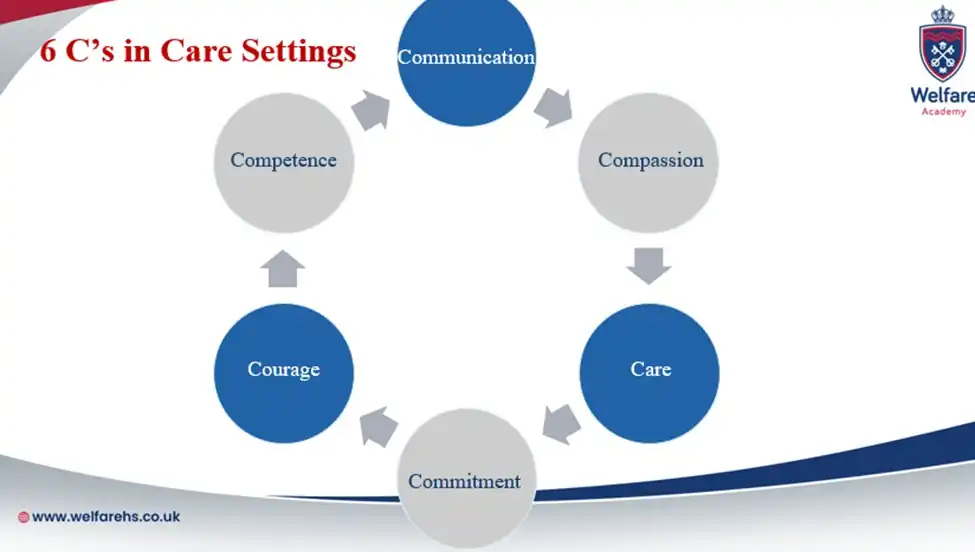
6 C’s in Care Settings
 Get Expert-crafted assignments



