| Word Count |
3000 words |
| Assessment Type |
Report |
MGT103 Assignment Brief
Key Information
| Module Code |
MGT 103 - Finance |
| Module Title |
Understanding Markets and Marketing |
| Assessment |
Report |
| Length |
3000 words |
| Weighting |
100% |
| Submission |
Tue, 03 February 2026 at 2pm |
Assessment Criteria
Upon successful completion of this assessment, students will be able to:
- Demonstrate an understanding of the different components, approaches and processes of marketing and the application to an organisational context.
- Examine and understand the customer engagement strategies used in contemporary organisations.
- Demonstrate an understanding of the dynamics of the marketing environment and the implications on marketing decisions.
- Demonstrate the ability to identify, gather and utilise information from a range of suitable/credible sources.Task
Task
You have been appointed to work in the marketing department of Flamingo. Flamingo is a regional health café based in Sunderland. https://flamingobarandcafe.com/ .
The first task the senior management team have given you is to undertake an evaluation of the organisation’s customer engagement strategy. They are particularly interested in exploring the current customer value approaches and identifying their competitive market position.
As such you have been asked to evaluate the organisation’s current customer groups and competitors as well as identifying any external factors impacting upon the venue. Using suitable research, you must evaluate the above factors and then identify suitable marketing mix strategies to move the business forward.
Alternatively, you can choose an organisation of your choice, other than Flamingo, but you must communicate this to your module leader and/or tutor.
Suggested Structure
- Introduction
- Environmental Analysis
- Customer Engagement Analysis
- Competitor Strategy Analysis
- Evaluation of Marketing Practice - using a 4P Framework
- Key Marketing Mix Recommendations
- Conclusion
- References
- Appendices (if applicable)
The report must be fully Harvard referenced and make use of appendices material where appropriate. Word count requirementand word limit penalties
The word count for this assignment is 3,000 with a leniency of 10% (+/-).
If the word limit is exceeded, the following penalties apply:
| Exceeds word limit by up to 10% |
No Penalty - tolerance band |
| Exceeds word limit by 10.1-20% |
5% deduction |
| Exceeds word limit by 20.1-30% |
10% deduction |
| Exceeds word limit by 30.1-40% |
15% deduction |
| Exceeds word limit by 40.1-50% |
20% deduction |
| Exceeds word limit by more than 50% |
Mark of zero |
- The word count does not include words in tables, title page, references or appendices.
- Students must indicate word count in submitted work - this word count should appear on your title page.
- The word count for this assignment is 3,000 with a leniency of 10% (+/-) i.e. a maximum word count of 3,300 and a minimum of 2,700 (it is strongly advised you do not use this lower threshold.
Late Work and Extensions
Where students are unable to meet the specified deadline, they may submit their work late and still have it marked within seven days (one calendar week) of a summative deadline (see Figure 1).
Students can submit work late by ONE of the following:
- Late submission (a penalty will be incurred) up to 7 days post summative deadline,
- An extension request of up to 7 days post summative deadline.
There are no additional late submission options outside the extension period of seven days.
Students can apply to the Module Leader, or nominated representative, for an extension (normally via university email) of up to one calendar week. An application for an extension can be at any point up to three (3) days after a summative deadline.
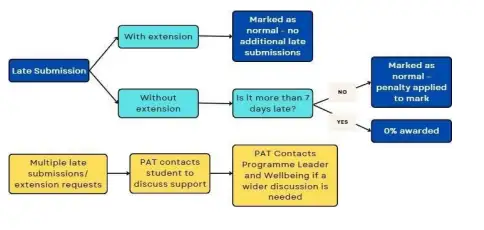
Figure 1: Late Work and Extensions Process
2.2 Late work penalties
| Time work is submitted after the deadline |
Penalty |
| Within 24 hours |
No penalty |
| 2-3 days |
5% deduction from total mark (or awarded mark if lower than pass mark) |
| 4-5 days |
10% deduction from total mark (or awarded mark if lower than pass mark) |
| 6-7 days |
15% deduction from total mark (or awarded mark if lower than pass mark) |
| More than 7 days |
Automatic fail, a mark of 0 is awarded |
MGT103 Assessment Criteria – Undergraduate Bachelor’s degree
These should be interpreted according to the level at which you are working
|
|
Categories
|
|
Grade
|
Relevance
|
Knowledge
|
Analysis
|
Argument and Structure
|
Critical Evaluation
|
Presentation
|
Reference to Literature
|
|
86 –
100%
|
The work examined is exemplaryand provides clear evidence of a complete graspof the knowledge, understanding and skillsappropriate to the Level of the qualification. There is also unequivocal evidence showing that all the learning outcomes and responsibilities appropriate to that Level are fully satisfied. At this level it is expected that the work will be exemplary in all the categories cited above. It will demonstrate a particularly compelling
evaluation, originality, and elegance of argument, interpretation or discourse.
|
|
76 –
85%
|
The work examined is excellent and demonstrates comprehensive knowledge, understanding and skills appropriate to the Level of the qualification. There is also excellent evidence showing that all the learning outcomes and responsibilities appropriate to that level are fully satisfied. At this level it is expected that the work will be excellent in the majority of the categories cited above or by demonstrating particularly compelling evaluation and
elegance of argument, interpretation or discourse and there may be some evidence of originality
|
|
70 –
75%
|
The work examined is of a high standard and there is evidence of comprehensive knowledge, understanding and skills appropriate to the Level of the qualification. There is also clearly articulated evidence demonstrating that all the learning outcomes and responsibilities appropriate to that level are satisfied At this level it is expected that the standard of the work will be high in the majority of the categories cited above or by demonstrating particularly compelling evaluation and elegance of argument, interpretation or discourse.
|
|
60 –
6G%
|
Directly relevant to the requirements of the assessment
|
A substantial knowledge of relevant material, showing a clear grasp of themes, questions and issues therein
|
Good analysis, clear and orderly
|
Generally coherent and logically structured, using an appropriate mode of argument and/or theoretical mode(s)
|
May contain some distinctive or independent thinking; may begin to formulate an independent position
in relation to theory and/or practice.
|
Well written, with standard spelling and grammar, in a readable style with acceptable format
|
Critical appraisal of up- to- date and/or appropriate literature. Recognition of different perspectives. Very good use of source material. Uses a range of sources
|
|
50 –
5G%
|
Some attempt to address the requirements of the assessment: may drift away from this in less focused passages
|
Adequate knowledge of a fair range of relevant material, with intermittent evidence
of an appreciation of its significance
|
Some analytical treatment, but may be prone to description, or to narrative, which lacks clear analytical purpose
|
Some attempt to construct a coherent argument, but may suffer loss of focus and consistency, with issues at stake stated only vaguely, or theoretical mode(s) couched in simplistic terms
|
Sound work which expresses a coherent position only in broad terms and in uncritical conformity to one or more standard views of the topic
|
Competently written, with only minor lapses from standard grammar, with acceptable format
|
Uses a variety of literature which includes some recent texts and/or appropriate literature, though not necessarily including a substantive amount beyond library texts. Competent use of source material.
|
|
40 –
4G%
|
Some correlation with the requirements of the assessment but there are instances of
irrelevance
|
Basic understanding of the subject but addressing a limited range of material
|
Largely descriptive or narrative, with little evidence of analysis
|
A basic argument is evident, but mainly supported by assertion and there may be a lack of clarity and coherence
|
Some evidence of a view starting to be formed but mainly derivative.
|
A simple basic style but with significant deficiencies in expression or format that may pose obstacles for the reader
|
Some up-to-date and/or appropriate literature used. Goes beyond the material tutor has provided. Limited use of sources to support a point.
|
|
35 –
3G%
|
Relevance to the requirements of the assessment may be very intermittent, and may be reduced to its vaguest and least
challenging terms
|
A limited
understanding of a narrow range of material
|
Heavy dependence on description, and/or on paraphrase, is common
|
Little evidence of coherentargument: lacks development and may be repetitive or thin
|
Almost wholly derivative: the writer’s Contribution rarely goes beyond simplifying paraphrase
|
Numerous deficiencies in expression and presentation: the writer may achieve clarity (if at all) only by using a simplistic or repetitious style
|
Barely adequate use of literature. Over reliance on material provided by the tutor.
|
|
The evidence provided shows that the majority of the learning outcomes and responsibilities appropriate to that Level are satisfied – for compensation consideration.
|
|
30 –
34%
|
The work examined provides insufficient evidence of the knowledge, understanding and skills appropriate to the Level of the qualification. The evidence provided shows that some of the learning outcomes and responsibilities appropriate to that Level are satisfied. The work will be weak in some of the indicators.
|
|
15-2G%
|
The work examined is unacceptable and provides little evidence of the knowledge, understanding and skills appropriate to the Level of the qualification.
The evidence shows that few of the learning outcomes and responsibilities appropriate to that Level are satisfied. The work will be weak in several of the indicators.
|
 Get Expert-crafted assignments