OFFERS!
 Get Expert-crafted assignments
Get Expert-crafted assignments
Save 51%
Get Expert-crafted assignments
Looking for Plagiarism-Free Answers for Your US, UK, Singapore, New Zealand, and Ireland College/University Assignments?
Talk to an Expert| Category | Coursework | Subject | Science |
|---|---|---|---|
| University | London South Bank University (LSBU) | Module Title | MED_6_TAT Thermofluids and Turbomachinery |
| Academic Year | 2026 |
|---|
This guide provides information on the laboratory programme carried out in the Thermofluids and Turbomachinery module (ENG_6_TAT). During the study of the unit, you will attend a practical laboratory session. This session will be timetabled for you once you have been allocated to a lab group.
The TD200 small engine test set is the main apparatus for the IC engine experiment, which is located in Room E135, Extension Block building.
Laboratories and practical workspace are potentially dangerous places. Therefore, you must follow the instructions below to work safely:
Internal Combustion Engine Performance
1: Introduction
The engine is a device that converts thermal energy to mechanical energy. The thermal energy is produced from the combustion of hydrocarbons in the presence of oxygen in an exothermic reaction commonly called the combustion reaction. The Second law of thermodynamics is the basis of all types of heat engines.
1.1: Purpose/Aim:
Understand the most important features of the internal combustion engine, including the thermodynamic cycle and performance characteristics.
2: Equipment
The TD200 small engine test set is designed for laboratory experiments; it is a single-cylinder and four-stroke internal combustion engine. The TD200 small engine test set consists of two main parts, as follows:
Figure 1 shows the layout of the TD200 engine.
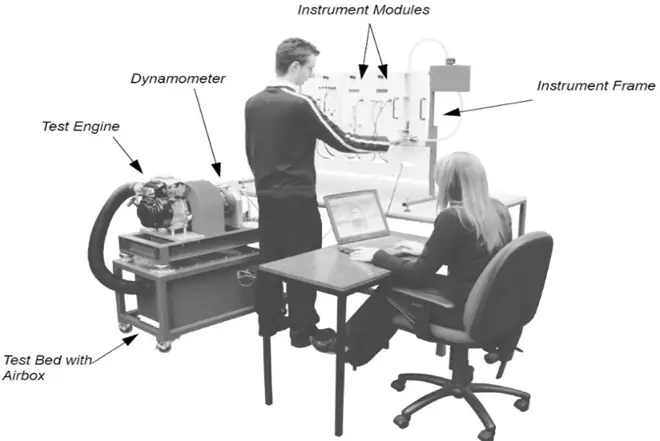
Figure 1: The general layout of the TD200
The working principle of one working cycle of four strokes engine consists of four processes as follows:
Each process is completed in one stroke of the piston, and one working cycle is completed in four strokes of the piston, as seen in Figure 2.
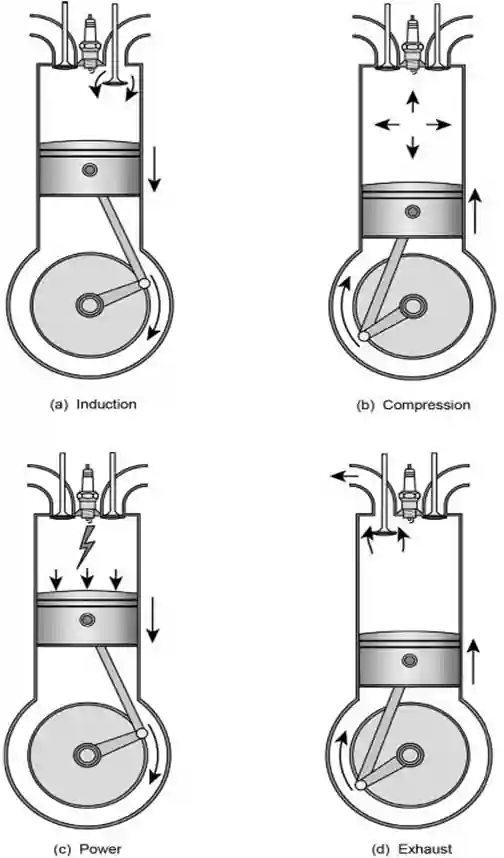
Figure 2: Four Strokes in one working Cycle of Piston
3: Procedure
The following procedure is to be followed:
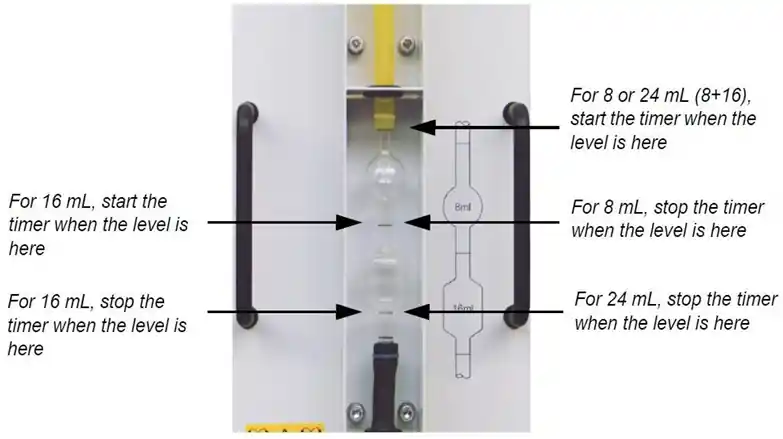
Figure 3: Fuel Measurement
Results and Assessment
The laboratory assignment will be assessed through a professional report format, including the following Seven Tasks:
Task 1: (30 marks)
Calculate and present in a table the following performance characteristics:
(Unless otherwise stated, equations for calculations should be taken from lecture notes and not supporting documentation from the testbed manufacturer.
(Note: Worked calculations for one of the engine speed sites, and a short description and note of key equations must be included in your report.
Task 2: (30 marks)
Plot on graphs the following performance characteristics vs engine speed (rpm):
(Note: Graphs must be done in MS EXCEL/ Matlab and included in your report. Provide a concise explanation of each of the trends observed in your graphs of performance characteristics.
Task 3: (10 marks)
Correct the measured Torque and Power to standard conditions according to the formula given below. Plot on an additional graph the Corrected and Raw powers:

Take the measured pressure to be the pressure of dry air in the absence of humidity data.
(Note: Worked calculations for one of the engine speed sites of data and a short description of the equation must be included in your report.
Task 4: (10 marks)
Choose one test site on which to construct an Energy Balance diagram. Indicate fuel energy input, Brake work output, Heat loss to coolant, and heat loss to exhaust. Comment on your results and compare them to published literature.
Task 5: (5 marks)
Discuss briefly the process of ignition and combustion in spark ignition (SI) engines. Show the process on a P-CA (pressure – crank angle) diagram, listing key stages in the process.
Task 6: (5 marks)
State five harmful pollutants that can be found in the exhaust gas of internal combustion (IC) engines, and describe briefly what they are.
Task 7: (10 marks)
Report presentation and clarification of the results.
(Note: The report must include worked calculations, a short description, a note of key equations and a clear discussion and conclusion of the results.
5: Useful information and Data
Capacity (manufacturer data) 208 cc or 208 cm3 (0.208 L)
Stroke 54 mm
Bore 70 mm
Compression ratio 8.5:1
Fuel specific gravity 0.74
Fuel Calorific value 43,800 kJ/kg Typical Specific Heat of Exhaust Gases 1 kJ/kg K
Maximum power absorption 7.5 kW@ 7000 rpm
Maximum Torque 15 Nm
Orifice diameter (nominal) 18.5 mm with Cd =0.6
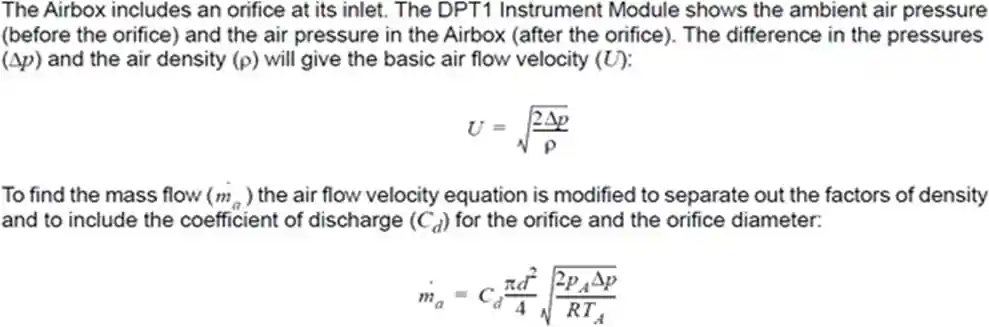
For Air Consumption Calculation
Get Answer of MED_6_TAT Thermofluids and Turbomachinery Assignment before the deadline
Order Non-Plagiarised AssignmentDo you need support with your MED_6_TAT Thermofluids and Turbomachinery Assignment? Our easy and friendly Mechanical Engineering Assignment Help is here to guide you through every topic. You can use our clear assignment examples and Samples to understand how to structure your work and improve your learning. With reliable Assignment Help UK, you get simple explanations, helpful tips, and study guidance to boost your confidence. Make your assignment journey stress-free—learn better, understand more, and move forward with success!


Hire Assignment Helper Today!
Let's Book Your Work with Our Expert and Get High-Quality Content