OFFERS!
 Get Expert-crafted assignments
Get Expert-crafted assignments
Save 51%
Get Expert-crafted assignments
Looking for Plagiarism-Free Answers for Your US, UK, Singapore, New Zealand, and Ireland College/University Assignments?
Talk to an Expert| Category | Coursework | Subject | Engineering |
|---|---|---|---|
| University | LSBU | Module Title | MED_6_IAE Innovation and Enterprise |

Read this coursework specification carefully, it tells you how you are going to be assessed, how to submit your coursework on-time and how (and when) you’ll receive your marks and feedback.
| Module Code | MED_6_IAE |
| Module Title | Innovation and Enterprise |
| Lecturers | Barney Townsend, Elisa Puccinelli |
| % of Module Mark | 40% |
| Distributed | 9/10/2025 |
| Submission Method | Online via this Module’s Moodle site |
| Submission Deadline | 07/04/2024 23:59 |
| Release of Feedback & Marks |
Feedback and provisional marks will be available in the Gradebook on Moodle within 15 working days of the submission date |
Engineering and innovation companies operate in dynamic and competitive environments, where success depends on developing original ideas that address real-world needs — and articulating a clear value proposition to users, colleagues, investors, and stakeholders. This assignment is designed to deepen your understanding of how innovation concepts are formed, evaluated, and positioned within a market context.
For this coursework, you will independently explore one of four RSA Spark innovation themes, generate a range of concept ideas, and explore their potential to make a compelling value proposition for an innovative startup company. You will also compare your value proposition to a relevant competitor, using real-world examples to support your analysis. The emphasis is on developing your own critical thinking, creativity, and evaluative judgement. Generative AI tools may be used to support idea generation, outlining, or formatting. However, all ideas, evaluations, and written analysis must be your own. You must declare any use of AI tools in your submission, following LSBU’s AI use policy.
This individual assignment asks you to generate, develop and select a promising product or service innovation concept in response to one of four RSA Spark mission briefs.
Review the four RSA Spark themes:
1. Urban Cool – Supporting cooler, greener and fairer cities
2. Where People Meet – Reimagining community spaces
3. Railway 200 & Beyond – Building the next generation of mobility
4. Creative Communities – Making creative education accessible to all
You are expected to:
- Generate a range of creative ideas for new product or service innovations, in response to one or more of the RSA Spark innovation challenges.
- Select from these, and justify a feasible and original concept to develop
- Define and communicate a clear value proposition for a startup business model around this concept
- Contrast your value proposition against existing alternatives or closest competitors
- Present your work clearly and professionally
Within the framework of these briefs, you have considerable freedom – so unleash your creativity! You concept might be a significant improvement of an existing product or service, or a completely novel proposal. If using technology, the feasibility should be validated and appropriate to the product and its environment, based upon your research into known technologies. You are NOT required to produce detailed or highly resolved product designs.
Your work at this stage will lay the foundation for the subsequent group project (CW2), in which you will pitch your CW1 business proposal to your group. The team will collectively select the concept of one of their members, to develop into a full business model for a putative start-up that presents an attractive opportunity for investors.
You should consider the following questions:
You should use the Strategyzer “trigger questions” and resource sheets on Moodle to help you develop a Value Proposition Canvas for your proposed innovation. Identify your closest competitor and create a value proposition canvas for them as well.
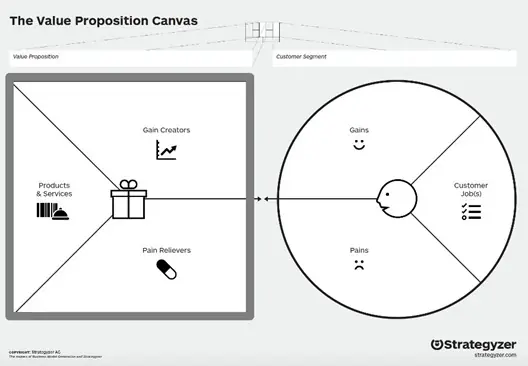
You should formulate (at minimum) one clear Value Proposition statement that summarises your proposal, through the format:
My company’s [product or service] helps [this customer segment] who want to [achieve these goals] by [reducing these pains] and [creating these gains] (unlike [this competitor]).
Compare and contrast the strengths and weaknesses of the your proposed value proposition to those of your nearest competitor(s) using a Strategy Canvas.
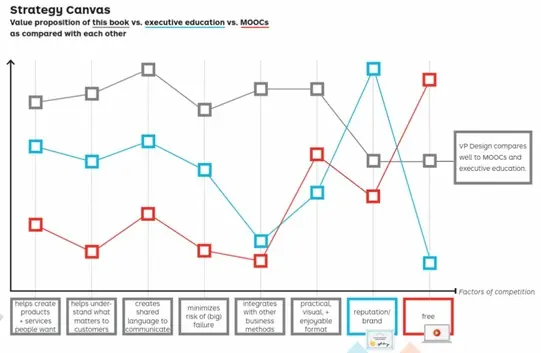
| Format | Formal typed report. |
| Word Count: | 1200-1500 words guideline |
| Presentation: |
|
| Referencing: |
Harvard Referencing should be used, see your Library Subject Guide for guides and tips on referencing. |
| Regulations: |
Make sure you understand the University Regulations on expected academic practice and academic misconduct. Note in particular:
TURNITIN: When you upload your work to the Moodle site it will be checked by anti-plagiarism software. |
This coursework will assess the following learning outcomes for this module.
In Week 6, you will pitch your CW1 proposal to your tutorial group. Each group will then select one member’s concept to develop further in CW2 as the basis of a startup business model and pitch. Your CW1 output will therefore feed directly into the next assessment.
LSBU marking criteria have been developed to help tutors give you clear and helpful feedback on your work. They will be applied to your work to help you understand what you have accomplished, how any mark given was arrived at, and how you can improve your work in future.
| Criteria | Weighting | What we’re looking for |
| Idea Development & Selection | 40% | Evidence of multiple ideas generated; reasoned selection using criteria (e.g. impact, feasibility); clarity and originality of final idea |
| Value Proposition & Market Context | 40% | Strong VPC aligned to user needs; relevant competitor identified and analysed; clear differentiation shown |
| Communication & Professionalism | 20% | Clarity, structure, grammar, referencing, visuals; appropriate use of template and academic integrity |
You must complete this assignment using the CW1 report structure suggested. This structure is designed to help you build your innovation concept step by step, and ensure your work is clear and easily assessable.
1. Mission Focus
Clearly state which RSA Spark mission theme you are responding to, and why. Briefly define the problem or opportunity your innovation addresses.
2. Idea Generation & Selection
Present a range of at least 3–4 initial ideas. Show evidence of creative thinking (e.g. sketches, mind maps, or bullet-point prompts).
Use a structured method (e.g. evaluation matrix or feasibility-impact grid) to select your final idea.
Explain the reasoning behind your selection.
3. Innovation Concept Description
Describe your selected idea clearly: what it is, who it’s for, and how it works. Include visuals if relevant.
Explain what makes it new, useful, or compelling.
4. Value Proposition Canvas
Use the VPC model to map out your idea in relation to customer needs. Present your canvas as either a completed diagram or a structured table.
Write a clear Value Proposition Statement using the ad-lib format provided in the template.
5. Competitor Comparison
Identify your closest competitor (product, brand, or service). Create a brief VPC for them and compare it to your own.
Use a Strategy Canvas or simple comparative table to highlight key differences.
6. Why this idea should be chosen
Make the case for why your idea is the strongest candidate to be developed further in the CW2 group project. What makes it exciting, innovative, and viable?
How could your team build on it, and what unique value would it bring to users or society?
You are aiming to convince your peers that your concept is the right one to take forward.
If MED_6_IAE Innovation and Enterprise CW1 seems confusing—how to formulate an idea, how to justify a business concept, or how to make coursework impactful—smart students change their approach. At Workingment, coursework writing services aren't just about writing. Here, you get the support that takes your coursework from a strong concept to a final, polished submission. Each component—idea clarity, structure, and analysis—is precisely aligned so that your work doesn't appear mediocre, but stands out. Plus, real coursework examples provide clear guidance on what to write and how to write it. And best of all—you won't be charged for unnecessary extras. You'll get what you need, clearly and directly.


Hire Assignment Helper Today!
Let's Book Your Work with Our Expert and Get High-Quality Content
 sasf
sasf